
The first installment of this series covered the origins of Autoware and TIER IV. This installment looks at the significance of open-source software (OSS) in autonomous driving.
OSS is software with publicly available source code that anyone can use freely. A well-known example is Linux, which is now the most widely used operating system for both servers and embedded systems. Other examples of OSS include word processors and spreadsheet software. However, most software applications are proprietary, meaning they have restrictions on use and distribution. Commercial software like Microsoft Windows and Office falls into this category.
Usage and distribution of commercial software are typically restricted to support a business model based on software sales. In contrast, open-source software is characterized by freedom of distribution and use, making it ideal for broad adoption without the risk of the technology being monopolized.
In the automotive industry, software is used for a wide range of functions, including engine control, brake control, and graphic meters. However, the software is integrated into specific hardware at factories before shipment. It is never used separately from the hardware.
Cars are equipped with software for driver assistance features such as automatic emergency braking (AEB) and lane-keeping assistance systems (LKAS), and these features are becoming more advanced each year. However, drivers are usually unaware of the in-car software while driving. The only time a car owner might become aware of the vehicle's software is when a software update is installed at a dealership.
However, the situation is somewhat different with autonomous driving software, compared to traditional embedded automotive software. In this case, autonomous driving refers to advanced systems at Level 4 and above, which operate vehicles without the need for a human driver. Autonomous driving involves a computer operating a vehicle instead of a human driver. The software acts in place of the driver’s brain, recognizing the environment around the car, determining where to direct the vehicle, and executing driving maneuvers.
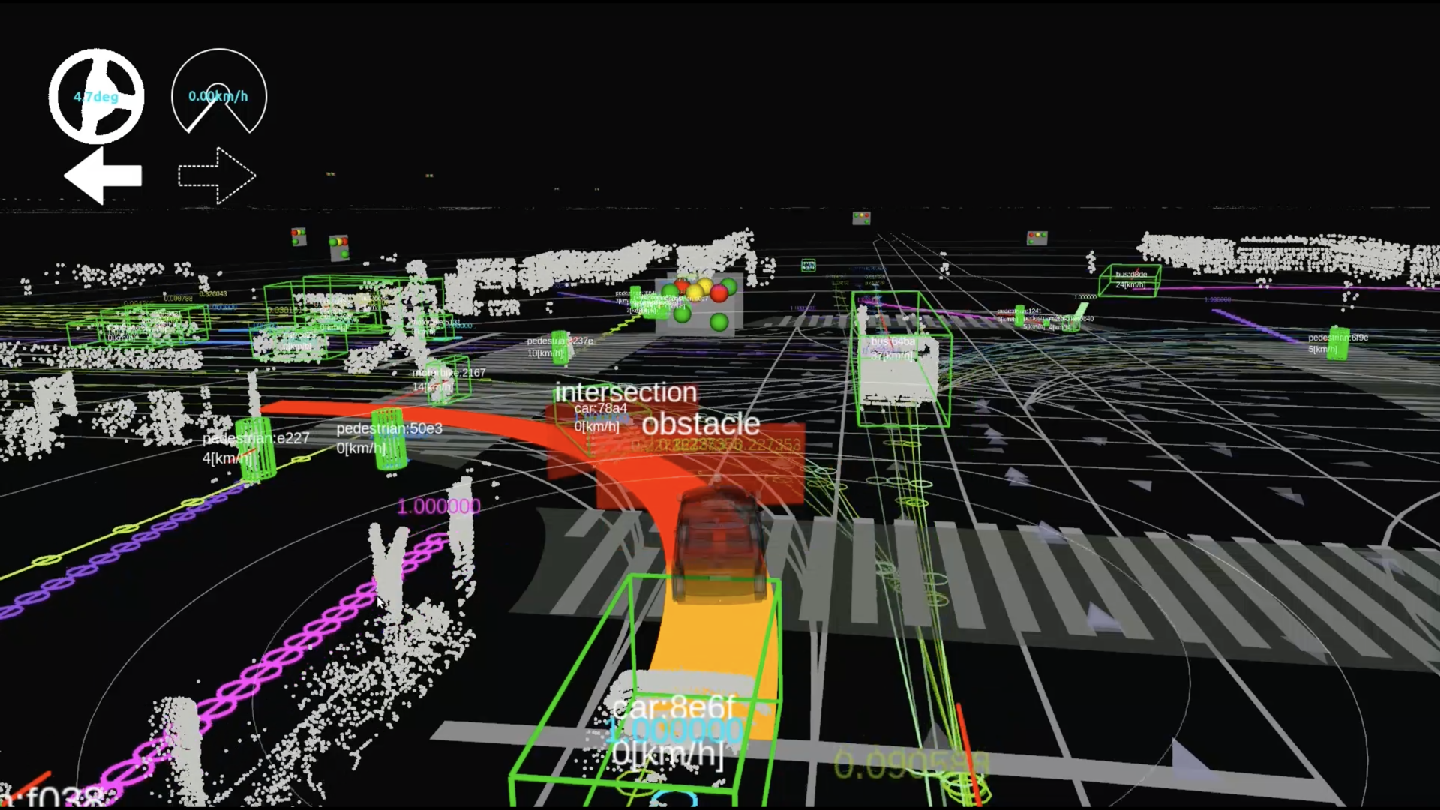
A digital visualization of a street scene
Picture the process of becoming a driver. First, you have to join a driving school and practice driving on a designated course while also receiving training on traffic laws and rules. Next, you get a provisional license and undergo practical driving instruction on real roads with a driving instructor. Finally, you have to pass a driving test to earn your license.
New drivers may not necessarily drive as smoothly and safely as experienced drivers when navigating unfamiliar roads. Experienced drivers have developed a range of driving skills, allowing them to handle various situations effectively. In contrast, beginners need to gain experience on actual roads and practice repeatedly to become proficient. But even experienced drivers might run into difficulties on unfamiliar roads in a foreign country, for example.
Traffic laws and driving etiquette vary from country to country, and there can be significant differences in the quality of road conditions. Drivers unfamiliar with the area may struggle to reach their destination, inadvertently commit traffic violations, or even encounter dangerous situations. And when there are fundamental differences in traffic rules such as driving on the opposite side of the road, risks can be greater for experienced drivers.
Becoming a skilled driver relies primarily on familiarity with the road environment, rather than the manufacturer or model of the car. The best way to navigate unfamiliar areas smoothly is to understand the local traffic rules and road conditions.
From the discussion so far, it should be clear that the most effective way to advance autonomous driving is to use software that understands the road environment. With open-source software, the more it’s utilized, the greater the advancements – and, in turn, the societal benefits. TIER IV’s commitment to autonomous driving with open-source software lies in this principle.
Next up, we’ll be covering operational design domains (ODD), which define the range of road environments where autonomous driving software is designed to operate.
Toshihide Ando | TIER IV Fellow
Toshihide joined TIER IV in 2019, where he has served in roles including vice president of technology before assuming his current position as fellow. Previous experience includes software development and R&D at a major Japanese automotive parts manufacturer.
TIER IV is always on the lookout for passionate individuals to join our journey. If you share our vision of making autonomous driving accessible to all, get in touch.
Visit our careers page to view all job openings.
If you’re uncertain about which roles align best with your experience, or if the current job openings don’t quite match your preferences, register your interest here. We’ll get in touch if a role that matches your experience becomes available, and schedule an informal interview.
Inquiries
- Media: pr@tier4.jp
- Business: sales@tier4.jp
Social Media
X (Japan/Global) | LinkedIn | Facebook | Instagram | YouTube
More