
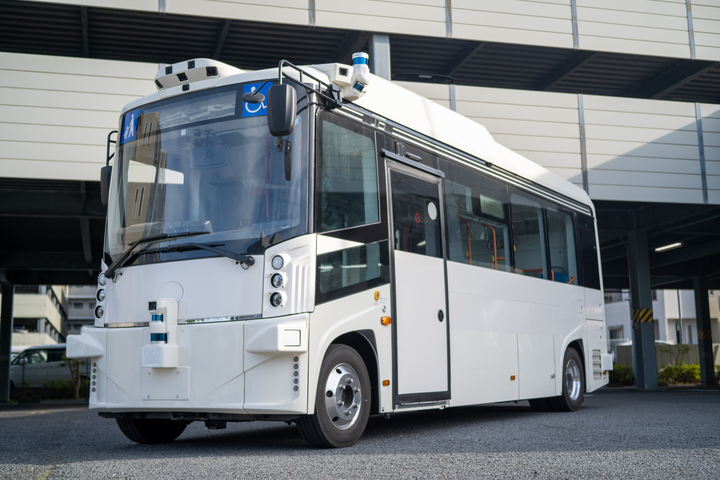
TIER IV Minibus
TIER IV is leading efforts to roll out autonomous driving services across Japan. Since April 2023, we’ve conducted trials in 23 locations — that figure rises to 26 if you include risk assessments, map creation, and advisory services. Let’s take a closer look at our efforts over the past year.
Needs, technical challenges
Addressing transportation issues stemming from driver shortages and revitalizing communities through the introduction of new technologies are just a couple of the anticipated benefits of autonomous driving. However, the technology has not yet reached a point where autonomous vehicles can perform all driving tasks under all conditions without human intervention, and there are no off-the-shelf systems available yet.
Also, it is necessary to obtain approval from the Ministry of Land, Infrastructure, Transport and Tourism to operate vehicles at Level 3 or higher, where the system is responsible for driving. The approval process is required to assess whether the technology is suitable for a particular driving environment. Therefore, conducting on-site trials is imperative during the deployment of autonomous driving services to ensure that conditions are met, and to refine the technology accordingly.
Nationwide trials
Trials serve two main purposes: validating the technology and enhancing societal acceptance. During the validation process, we confirm the conditions under which vehicles can operate safely and verify the feasibility of the autonomous transportation service. A driver is present in the vehicle, ready to intervene manually if the system makes a mistake. We gather data on incorrect judgments and use it to refine the system.
Validation involves assessing the impact of autonomous vehicles on existing roads and traffic regulations. In terms of societal acceptance, trials also provide an opportunity for local residents to understand the value of autonomous services, ensuring that the technology is embraced by the communities it will serve.
TIER IV’s role
It typically takes around 3 to 4 years to deploy autonomous driving services up to Level 4. In the first year, we select routes and verify the effectiveness of autonomous driving, considering factors like technology capabilities and expected service demand.
From the second year onwards, we build upon the experience gained in the first year, making adjustments to routes. We also progress with obtaining permits and approvals. Once the permits are acquired, we continue the validation process, moving toward actual operations.
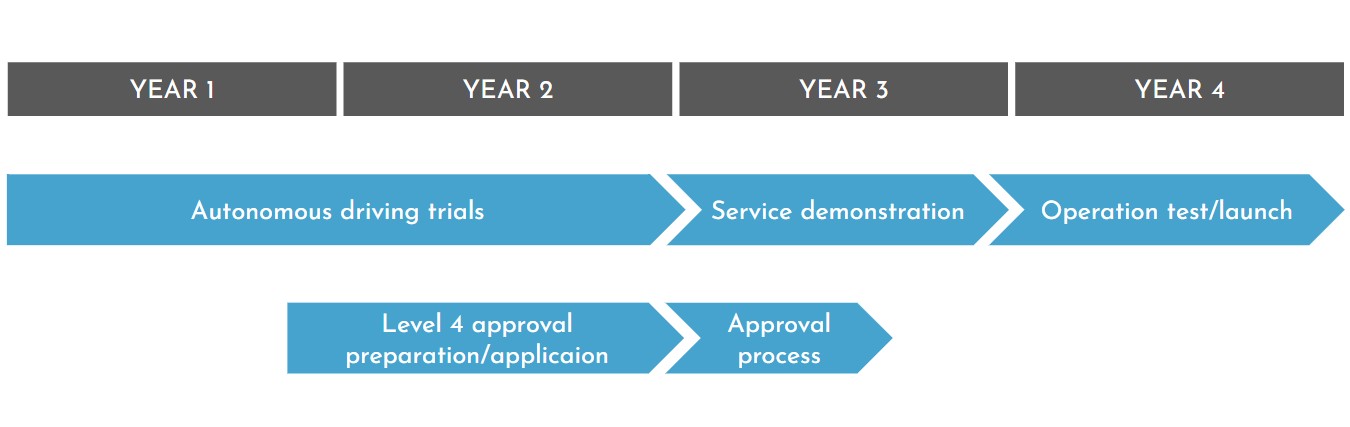
TIER IV doesn’t tackle the process alone, we collaborate with partners, supplying vehicles, analyzing routes, conducting preliminary simulations, fine-tuning the system, and providing support for software and hardware maintenance during operations.
Vehicle lineup
We select which vehicles to use based on the intended applications in the trial area. TIER IV Minibus, which made its debut during 2023 trials, is one such vehicle.
Minibus
A compact bus with a capacity of 23 passengers and 15 seats, Minibus is part of TIER IV’s “fanfare lineup. It has been designed to operate on fixed bus routes, which are an essential part of regional transportation services.
The vehicle is equipped with various sensors. They are configured in a way that even if one sensor fails, there are backups in place to ensure the vehicle can navigate safely and effectively. This is crucial for meeting the requirements needed to operate at Level 4. There are no particular restrictions on the software used in the vehicle. However, during trials conducted by TIER IV, our autonomous driving software is employed.
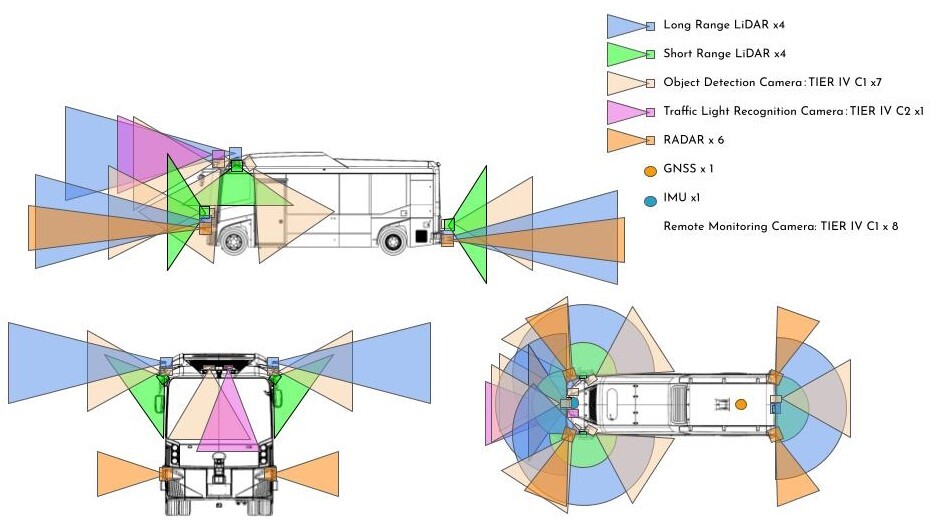
Sensor configuration
FY23 trials
Over the last 12 months, TIER IV has been involved in autonomous bus trials across Japan, with routes along urban streets and in tourist areas with narrow roads — one of the routes was about 60 kilometers round-trip. Our vehicles have encountered all kinds of weather conditions and we’ve collected data on challenging conditions like snowfall, heavy rain, and temperature variations that autonomous driving systems need to handle.
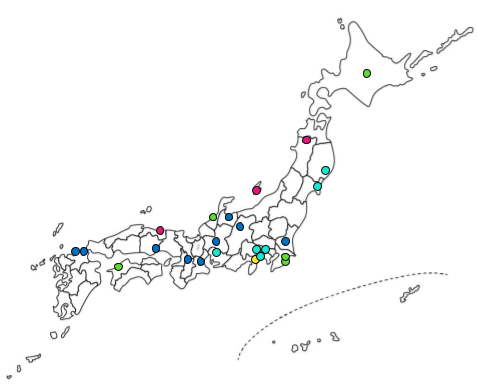
Projects in Japan (April 2023-March 2024)
The largest distance covered in one area reached approximately 2,000 kilometers. Compared to previous years, we worked in more regions and covered longer distances, giving us a sense that we are getting closer to the widespread deployment of autonomous driving services.
To showcase specific examples, let’s look at trials in the cities of Shiojiri in Nagano Prefecture and Komatsu in Ishikawa Prefecture.
Shiojiri
Having been involved in autonomous vehicle trials since 2020, Shiojiri has been somewhat of a pioneer when it comes to next-generation transportation services. Autonomous operations have been demonstrated on various routes starting from Shiojiri Station.
The focus has been on developing sustainable public transport services while also capitalizing on autonomous driving technology to contribute to community revitalization efforts. A distinctive feature of autonomous driving in Shiojiri lies in the initiative taken by local residents to spearhead services. Also, children are learning about the technology in schools, fostering greater awareness and acceptance of autonomous driving within the community.
TIER IV’s Minibus model has been put through its paces in the city, with local workers managing operations. Some high schoolers have the novel opportunity of riding on an autonomous bus every morning as the service stops at a school along the route. From kindergarteners to senior citizens, people of all ages have traveled on the bus during trials.
Komatsu
Komatsu, like Shiojiri, has been working on autonomous driving since 2020. Since the arrival of the Hokuriku Shinkansen at Komatsu Station on March 16, the city is now served by high-speed rail and air links via its airport. An autonomous bus service launched this month carries travelers between the airport and the station. The service is part of efforts to develop Komatsu into a major transportation hub in the Hokuriku region.
In fiscal 2022, trials involving the GSM8 microbus revealed performance limitations, particularly in terms of speed and passenger capacity. However, the debut of the TIER IV Minibus in the following year represented a substantial advancement. The new vehicle has a maximum speed of 35 kilometers per hour and can accommodate up to 15 seated passengers.
Learn more about Komatsu’s autonomous bus service
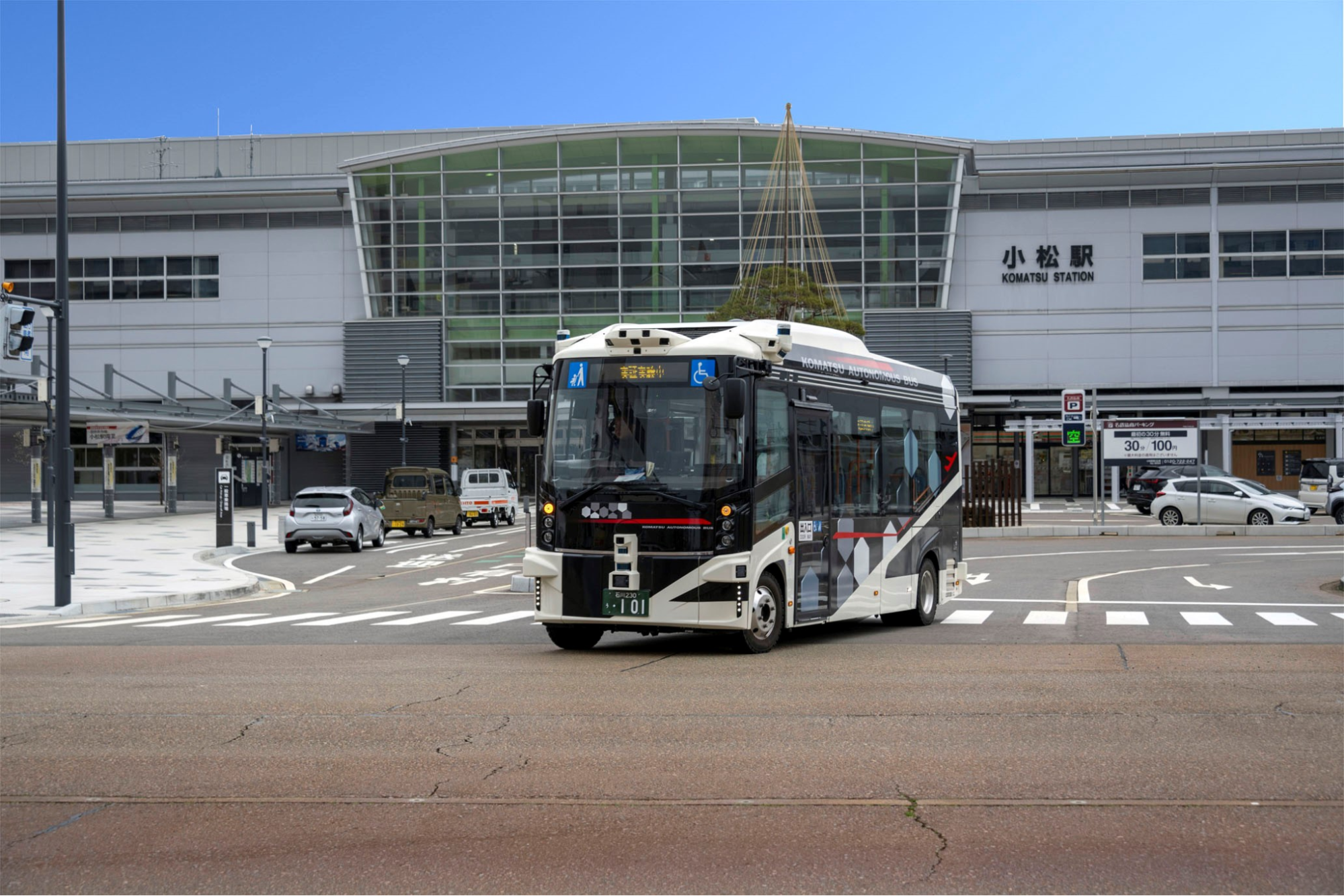
Bus at the Komatsu station
On March 9, the service began operations with Level 2 autonomy, with a driver on board collecting fares from passengers. It marked TIER IV’s first involvement in a commercial service that is scheduled to operate year-round.
TIER IV’s autonomous driving tech
TIER IV’s technology is continuously evolving, with the capabilities of the autonomous driving system — e.g. the range of use cases it can handle — expanding each year. Let’s look at the technological advancements that have been made since the government fiscal year starting in April 2022. It’s worth noting that the system used in trials is based on technology developed for R&D purposes that has undergone a certain level of verification.
In fiscal 2022, trials mainly featured the GSM8, which travels at less than 20 kilometers per hour. In complex road environments, there were many situations that the system couldn’t handle, such as avoiding parked vehicles, which meant less time was spent driving autonomously.
A particularly challenging aspect was that the system relied solely on the current positions of other traffic to make decisions. By planning and setting up specific areas to look at in advance and marking them on a map, the system was able to make decisions to avoid collisions based on the current positions of obstacles. For example, at an intersection, the system could be configured to look X meters ahead in the oncoming lane and stop if an obstacle is detected.
While this method offers the advantage of providing a straightforward explanation of the system’s decision-making process, it also comes with challenges in terms of fine-tuning. Sometimes, the vehicle kept stopping when it could have continued, causing traffic disruptions. Also, unexpected speeds of oncoming vehicles were problematic. To tackle these issues, safety drivers intervened to override the autonomous system and switch to manual mode. However, such interventions resulted in less time driving autonomously.
Latest developments
The software has made significant strides with the introduction of the Minibus, now supporting over four times more features than before.
The system can now anticipate the movements of nearby traffic, allowing it to avoid accidents without relying heavily on pre-configured settings. Also, it now includes features to navigate smoothly around parked cars, change lanes, and recognize signals, covering almost all essential driving scenarios. The system can tackle situations that triggered unnecessary stoppages in the fiscal 2022 trials.
Autonomous driving operations are now possible at a maximum speed of 35 kilometers per hour. While that might feel a bit slow for regular vehicles, it’s relatively smooth for bus operations.
Despite all the progress made so far, there are still some shortcomings that need to be addressed before the technology can be rolled out nationwide. For instance, the system can’t yet navigate around moving obstacles in situations where even human drivers would struggle. Also, it can’t yield to oncoming vehicles on narrow roads. To avoid moving obstacles, the system must constantly update its routes in real time. It needs highly accurate predictions of traffic movements and must be able to make decisions instantaneously to avoid stopping in oncoming lanes.
Autonomous vehicles also face challenges in yielding on narrow roads and navigating railroad crossings safely. Currently, railroad crossings are not included in our operational design domains, and there’s uncertainty about addressing this issue in the future. Handling adverse weather conditions like snow or heavy rain is also difficult. Autonomous operations are designed with the anticipation of possible suspensions or manual interventions when necessary. To solve these challenges, TIER IV is collecting data from trials across Japan.
Future goals
Validation tests had previously been conducted with vehicles owned by TIER IV or partners. However, this approach shifted in fiscal 2023.
In Shiojiri, the local government and regional transportation providers teamed up to get autonomous vehicles. A similar arrangement occurred in Komatsu. TIER IV is currently involved in two autonomous bus services offering year-round services, the second of which is in Yokoshibahikari, Chiba Prefecture.
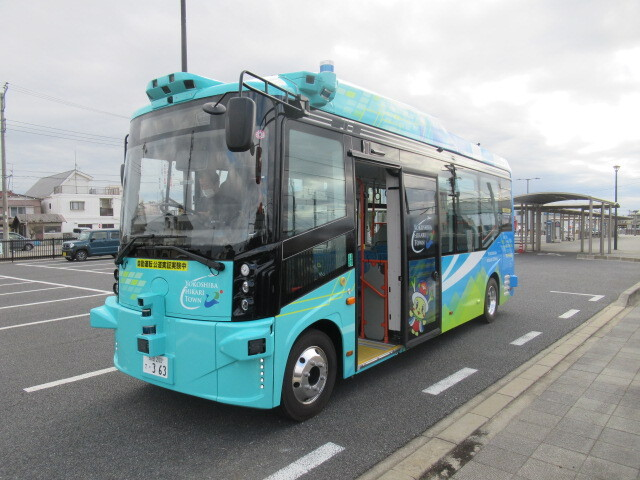
A Level 2 autonomous bus service operates year-round in Yokoshibahikari, Chiba Prefecture.
In October 2023, TIER IV acquired Level 4 certification at GLP ALFALINK in Sagamihara. Moving forward, we’re committed to obtaining Level 4 certification in more locations while also expanding the number of services offering year-round operations.
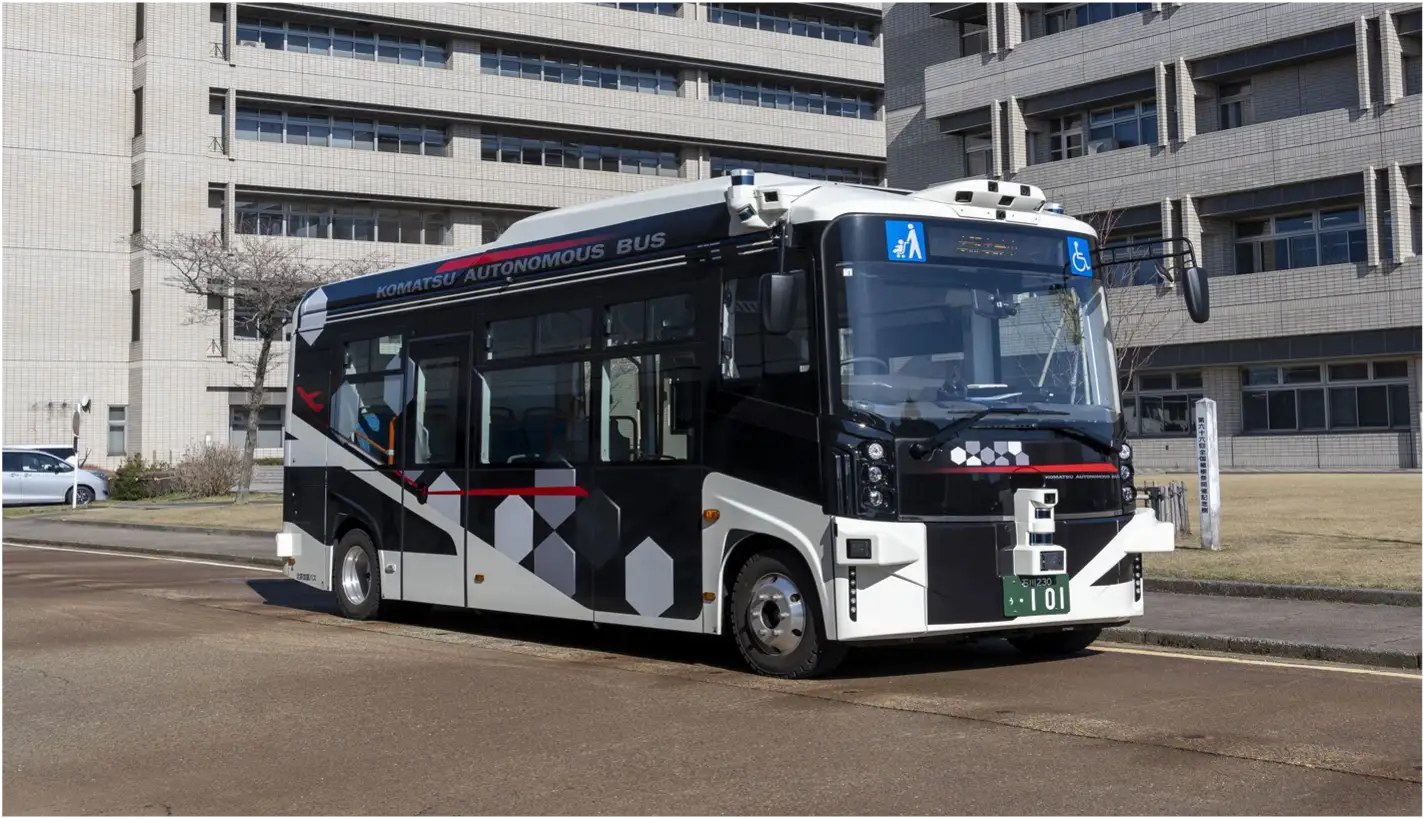
An autonomous bus service ferries passengers between Komatsu Airport and Komatsu Station in Ishikawa Prefecture.
Wrap-up
TIER IV is committed to harnessing the power of autonomous driving to tackle transportation challenges and deliver benefits to communities far and wide.
In February 2024, TIER IV launched L4 RIDE, aimed at helping local governments and public transportation operators looking to implement autonomous driving services. Drawing from expertise built up in previous trials and regulatory approvals, TIER IV offers comprehensive support, covering hardware, software, and regulatory compliance, for a smooth transition to service operations.
As a part of our commitment to rolling out autonomous driving technology, we’ve been holding online seminars for local governments and transportation operators exploring next-generation mobility services. For information about our seminar in April, click here (Japanese only).
Yusuke Fujii
Yusuke, an engineer who has been involved in autonomous vehicle trials since the launch of TIER IV, led the development of the AD system used at the 2020 Tokyo Olympic and Paralympic Games. Currently, Fujii oversees sensor sales and operations related to the rollout of autonomous bus services.
Shinichiro Okazaki
Since joining TIER IV in 2019, Shinichiro has been involved in projects including collaborations with automotive OEMs on the development of autonomous vehicles. He has also worked with local governments to establish autonomous bus services and has been involved in initiatives to develop talent in the AD sector. Shinichiro currently leads business efforts to implement autonomous bus services.
TIER IV is always on the lookout for passionate individuals to join our journey. If you share our vision of making autonomous driving accessible to all, get in touch. We’re also interested in hearing from people who want to drive the adoption of autonomous vehicles in communities across the country, alongside municipalities, transportation operators, and partner companies. For more information, check out the openings below.
Visit our careers page to view all job openings.
If you’re uncertain about which roles align best with your experience, or if the current job openings don’t quite match your preferences, register your interest here. We’ll get in touch if a role that matches your experience becomes available, and schedule an informal interview.
Media Contact
-
For press, community and speaking requests, contact pr@tier4.jp.
-
For business and partnership opportunities, contact sales@tier4.jp.
Social Media
X (Japan/Global) |LinkedIn| Facebook | Instagram| YouTube
More